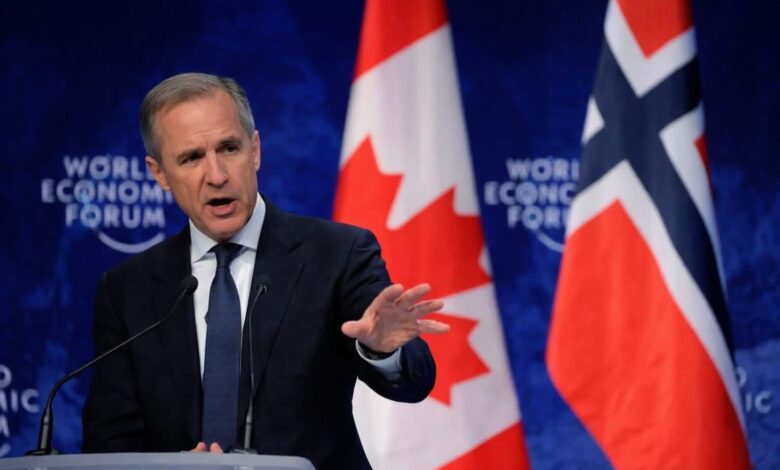
خطاب رئيس الوزراء الكندي مارك كارني في منتدى دافوس، الترجمة :
كل يوم نتذكّر أننا نعيش في عصر تنافس القوى العظمى. يُقال لنا إن النظام الدولي القائم على القواعد يتلاشى. وإن الأقوياء يفعلون ما يستطيعون، والضعفاء يعانون ما لا مفرّ منه. تُقدَّم مقولة ثوسيديدس هذه على أنها حتمية — منطق العلاقات الدولية الطبيعي وهو يعاود الظهور.
وأمام هذا المنطق، تميل الدول بقوة إلى “المسايرة من أجل السلامة”. إلى التكيّف. إلى تجنّب المتاعب. إلى الأمل بأن الامتثال سيجلب الأمان. لكنه لن يفعل.
فما هي خياراتنا إذن؟
في عام 1978، كتب المنشق التشيكي فاتسلاف هافل مقالاً بعنوان «قوة المستضعفين». وفيه طرح سؤالاً بسيطاً: كيف استمرّ النظام الشيوعي؟
بدأ جوابه ببقّال. كل صباح، يضع هذا البقّال لافتة في واجهة متجره:
«يا عمّال العالم اتحدوا!»
هو لا يؤمن بها. ولا أحد يؤمن بها.
لكنه يضع اللافتة على أي حال — لتجنّب المتاعب، وللإشارة إلى الامتثال، وللمضيّ مع التيار. ولأن كل بقّال في كل شارع يفعل الشيء نفسه، يستمرّ النظام.
ليس بالعنف وحده، بل بمشاركة الناس العاديين في طقوس يعرفون في قرارة أنفسهم أنها زائفة.
سمّى هافل هذا «العيش داخل الكذبة». فسلطة النظام لا تنبع من حقيقته، بل من استعداد الجميع للتصرّف كما لو كان حقيقياً. وهشاشته تنبع من المصدر نفسه: فعندما يتوقف شخص واحد فقط عن التمثيل — عندما يزيل البقّال لافتته — يبدأ الوهم في التصدّع.
لقد حان الوقت لكي تزيل الشركات والدول لافتاتها.
على مدى عقود، ازدهرت دول مثل كندا في ظل ما سمّيناه النظام الدولي القائم على القواعد. انضممنا إلى مؤسساته، وأثنينا على مبادئه، واستفدنا من قابليته للتنبؤ. واستطعنا أن ننتهج سياسات خارجية قائمة على القيم تحت مظلته.
كنا نعلم أن قصة النظام الدولي القائم على القواعد كانت جزئياً غير صحيحة. وأن الأقوى يعفي نفسه عندما يناسبه ذلك. وأن قواعد التجارة تُطبَّق بشكل غير متكافئ. وأن القانون الدولي يُطبَّق بدرجات متفاوتة من الصرامة تبعاً لهوية المتهم أو الضحية.
كانت هذه الخيالات مفيدة، وكانت الهيمنة الأميركية على وجه الخصوص تساعد في توفير السلع العامة: حرية الملاحة، نظاماً مالياً مستقراً، أمناً جماعياً، ودعماً لأطر تسوية النزاعات.
لذلك وضعنا اللافتة في النافذة. شاركنا في الطقوس. وتجنبنا إلى حد كبير الإشارة إلى الفجوة بين الخطاب والواقع.
لم تعد هذه الصفقة مجدية.
دعوني أكون مباشراً: نحن في خضم قطيعة، لا مجرد مرحلة انتقالية. خلال العقدين الماضيين، كشفت سلسلة من الأزمات المالية والصحية والطاقوية والجيوسياسية مخاطر الاندماج العالمي المفرط.
ومؤخراً، بدأت القوى العظمى تستخدم هذا الاندماج الاقتصادي كسلاح: الرسوم الجمركية كأداة ضغط، والبنية التحتية المالية كوسيلة إكراه، وسلاسل التوريد كنقاط ضعف يمكن استغلالها.
لا يمكنك أن «تعيش داخل كذبة» المنفعة المتبادلة عبر الاندماج، عندما يصبح الاندماج نفسه مصدراً لإخضاعك.
لقد تراجعت المؤسسات متعددة الأطراف التي اعتمدت عليها القوى المتوسطة — منظمة التجارة العالمية، الأمم المتحدة، مؤتمرات المناخ — أي بنية حلّ المشكلات الجماعية.
ونتيجة لذلك، توصّلت دول كثيرة إلى الاستنتاج نفسه: عليها أن تطوّر قدراً أكبر من الاستقلالية الاستراتيجية — في الطاقة، والغذاء، والمعادن الحيوية، والتمويل، وسلاسل التوريد.
هذا الدافع مفهوم. فالدولة التي لا تستطيع إطعام نفسها، أو تزويد نفسها بالطاقة، أو الدفاع عن نفسها، لا تملك خيارات كثيرة. وعندما لا تعود القواعد تحميك، يجب أن تحمي نفسك.
لكن لنتعامل بوضوح مع ما يقود إليه هذا المسار. عالم القلاع سيكون أفقر، وأكثر هشاشة، وأقل استدامة.
وهناك حقيقة أخرى: إذا تخلّت القوى العظمى حتى عن التظاهر بالالتزام بالقواعد والقيم، وانطلقت في السعي غير المقيّد وراء مصالحها وقوتها، فإن مكاسب «النهج الصفقاتي» ستصبح أصعب في التكرار. فالهيمنة لا يمكنها الاستمرار إلى ما لا نهاية في تسييل علاقاتها.
سيسعى الحلفاء إلى التنويع للتحوّط من عدم اليقين. إلى شراء التأمين. إلى توسيع الخيارات. وهذا يعيد بناء السيادة — سيادة كانت تقوم سابقاً على القواعد، لكنها ستُبنى بشكل متزايد على القدرة على تحمّل الضغوط.
هذا النوع الكلاسيكي من إدارة المخاطر له ثمن.
لكن كلفة الاستقلالية الاستراتيجية، وكلفة السيادة، يمكن تقاسمها أيضاً. فالاستثمارات الجماعية في الصمود أقل تكلفة من أن يبني كل طرف قلعته الخاصة.
والمعايير المشتركة تقلّل من التشرذم. والتكاملات المتبادلة مكاسبها إيجابية للجميع.
السؤال المطروح أمام القوى المتوسطة، مثل كندا، ليس ما إذا كنا سنتكيّف مع هذا الواقع الجديد. لا بدّ لنا من ذلك. بل السؤال هو: هل نتكيّف ببناء جدران أعلى فقط — أم نسعى إلى شيء أكثر طموحاً؟
كانت كندا من أوائل من تلقّى جرس الإنذار، ما دفعنا إلى تغيير جذري في وضعنا الاستراتيجي.
يعلم الكنديون أن افتراضنا القديم والمريح بأن الجغرافيا وعضويتنا في التحالفات تكفل لنا تلقائياً الازدهار والأمن لم يعد صالحاً.
يرتكز نهجنا الجديد على ما سمّاه ألكسندر ستوب «الواقعية القائمة على القيم» — أو بعبارة أخرى، أن نكون مبدئيين وعمليين في آن واحد.
مبدئيين في التزامنا بالقيم الأساسية: السيادة وسلامة الأراضي، حظر استخدام القوة إلا بما يتوافق مع ميثاق الأمم المتحدة، واحترام حقوق الإنسان.
وعمليين في إدراك أن التقدم غالباً ما يكون تدريجياً، وأن المصالح تتباين، وأن ليس كل شريك يتقاسم قيمنا. نحن ننخرط على نطاق واسع وبشكل استراتيجي، بعيون مفتوحة. ونتعامل مع العالم كما هو، لا كما نتمناه.
تقوم كندا بمعايرة علاقاتها بحيث يعكس عمقها قيمنا. ونحن نعطي الأولوية للانخراط الواسع لتعظيم نفوذنا في عالم يتسم بالسيولة والمخاطر وارتفاع الرهانات.
لم نعد نعتمد فقط على قوة قيمنا، بل أيضاً على قيمة قوتنا.
ونحن نبني هذه القوة في الداخل.
منذ تولّي حكومتي السلطة، خفّضنا الضرائب على الدخل، والأرباح الرأسمالية، والاستثمار التجاري. وأزلنا جميع الحواجز الفدرالية أمام التجارة بين المقاطعات. ونعجّل باستثمارات بقيمة تريليون دولار في الطاقة، والذكاء الاصطناعي، والمعادن الحيوية، وممرات التجارة الجديدة، وغيرها.
نضاعف إنفاقنا الدفاعي بحلول عام 2030، ونفعل ذلك بطرق تعزّز صناعاتنا المحلية.
وننوّع علاقاتنا الخارجية بسرعة. فقد أبرمنا شراكة استراتيجية شاملة مع الاتحاد الأوروبي، بما في ذلك الانضمام إلى برنامج SAFE الخاص بمشتريات الدفاع الأوروبية.
ووقّعنا اثنتي عشرة اتفاقية تجارية وأمنية أخرى في أربع قارات خلال الأشهر الستة الماضية. وفي الأيام القليلة الماضية، أنهينا شراكات استراتيجية جديدة مع الصين وقطر. ونحن نتفاوض على اتفاقيات تجارة حرّة مع الهند، ورابطة آسيان، وتايلاند، والفلبين، وتجمّع ميركوسور.
وللمساعدة في حل المشكلات العالمية، نعتمد «الهندسة المتغيّرة» — تحالفات مختلفة لقضايا مختلفة، بناءً على القيم والمصالح.
في أوكرانيا، نحن عضو أساسي في «تحالف الراغبين» وأحد أكبر المساهمين في الدفاع والأمن على أساس نصيب الفرد. وفي سيادة القطب الشمالي، نقف بثبات مع غرينلاند والدنمارك، وندعم بالكامل حق غرينلاند الفريد في تقرير مستقبلها. والتزامنا بالمادة الخامسة لا يتزعزع.
نعمل مع حلفائنا في الناتو (بما في ذلك دول الشمال والبلطيق الثماني) لتعزيز أمن الجناحين الشمالي والغربي للحلف، عبر استثمارات غير مسبوقة في الرادارات بعيدة المدى، والغواصات، والطائرات، والقوات على الأرض.
في التجارة التعددية المحدودة، نقود الجهود لبناء جسر بين اتفاق الشراكة عبر المحيط الهادئ والاتحاد الأوروبي، بما يخلق تكتلاً تجارياً جديداً يضم 1.5 مليار نسمة. وفي المعادن الحيوية، نشكّل نوادي للمشترين ترتكز على مجموعة السبع، لتمكين العالم من التنويع بعيداً عن تركز الإمدادات. وفي الذكاء الاصطناعي، نتعاون مع ديمقراطيات متقاربة في التفكير لضمان ألا نُجبَر في النهاية على الاختيار بين الهيمنات والشركات العملاقة.
هذا ليس تعددية ساذجة. ولا هو اعتماد على مؤسسات متآكلة. بل هو بناء تحالفات فعّالة، قضية بقضية، مع شركاء يتشاركون ما يكفي من الأرضية المشتركة للتحرك معاً. وفي بعض الحالات، سيكون ذلك مع الغالبية العظمى من دول العالم.
وهو أيضاً بناء شبكة كثيفة من الروابط في التجارة والاستثمار والثقافة، يمكننا الاعتماد عليها في مواجهة التحديات والفرص المقبلة.
على القوى المتوسطة أن تعمل معاً، لأنك إن لم تكن على الطاولة، فأنت على القائمة.
القوى العظمى تستطيع تحمّل العمل منفردة. فلديها حجم الأسواق، والقدرات العسكرية، وأدوات النفوذ لفرض الشروط. أما القوى المتوسطة فلا. وعندما نتفاوض ثنائياً فقط مع قوة مهيمنة، فإننا نتفاوض من موقع ضعف.
نقبل بما يُعرض علينا. ونتنافس فيما بيننا على من يكون أكثر ممالأة. هذا ليس سيادة. بل هو تمثيل للسيادة مع قبول الخضوع.
في عالم تنافس القوى العظمى، أمام الدول الواقعة في الوسط خياران: إما أن تتنافس فيما بينها على نيل الرضا، أو أن تتحد لخلق مسار ثالث مؤثّر.
لا ينبغي أن يسمح صعود القوة الصلبة بأن يعمينا عن حقيقة أن قوة الشرعية، والنزاهة، والقواعد ستظل قوية — إذا اخترنا أن نستخدمها معاً.
وهذا يعيدني إلى هافل. ماذا يعني أن «نعيش في الحقيقة» بالنسبة للقوى المتوسطة؟
يعني تسمية الواقع كما هو. التوقف عن استدعاء «النظام الدولي القائم على القواعد» كما لو كان لا يزال يعمل كما هو معلَن. تسمية النظام باسمه الحقيقي: فترة تسعى فيها الأقوى إلى تحقيق مصالحها مستخدمة الاندماج الاقتصادي كسلاح للإكراه.
ويعني الاتساق في الفعل. تطبيق المعايير نفسها على الحلفاء والخصوم.
عندما تنتقد القوى المتوسطة الترهيب الاقتصادي من جهة، وتلتزم الصمت حياله من جهة أخرى، فإننا نبقي اللافتة في النافذة.
ويعني بناء ما نزعم الإيمان به. فبدلاً من انتظار الهيمنة لإعادة نظام هي نفسها تفككه، علينا إنشاء مؤسسات واتفاقيات تعمل كما هو موصوف لها.
ويعني تقليص مصادر النفوذ التي تمكّن الإكراه. فبناء اقتصاد محلي قوي يجب أن يكون دائماً أولوية كل حكومة. والتنويع الدولي ليس مجرد حصافة اقتصادية؛ بل هو الأساس المادي لسياسة خارجية صادقة. تكسب الدول حق اتخاذ مواقف مبدئية عبر تقليل تعرضها للانتقام.
لدى كندا ما يريده العالم. نحن قوة عظمى في مجال الطاقة. نملك احتياطيات هائلة من المعادن الحيوية. لدينا أكثر السكان تعليماً في العالم. وصناديق تقاعدنا من الأكبر والأكثر تطوراً عالمياً. لدينا رأس المال، والموهبة، وحكومة تملك قدرة مالية هائلة للتحرك الحاسم.
ولدينا القيم التي يطمح إليها كثيرون.
كندا مجتمع تعددي ناجح. ساحتنا العامة صاخبة، ومتنوعة، وحرة. ولا يزال الكنديون ملتزمين بالاستدامة. نحن شريك مستقر وموثوق — في عالم يفتقر إلى الاستقرار — شريك يبني العلاقات ويقدّرها على المدى الطويل.
ولدى كندا أمر آخر: إدراك لما يحدث، وعزم على التصرف بناءً عليه. نحن نفهم أن هذه القطيعة تتطلب أكثر من مجرد التكيّف. إنها تتطلب الصراحة بشأن العالم كما هو. لقد أزلنا اللافتة من النافذة.
النظام القديم لن يعود. ولا ينبغي أن نرثيه. فالحنين ليس استراتيجية. لكن من هذا التصدّع، يمكننا أن نبني شيئاً أفضل، وأقوى، وأكثر عدلاً.
هذه هي مهمة القوى المتوسطة، التي لديها ما تخسره أكثر من غيرها في عالم القلاع، وما تكسبه أكثر من غيرها في عالم من التعاون الحقيقي.
لدى الأقوياء قوتهم. لكن لدينا نحن أيضاً شيئاً: القدرة على التوقف عن التظاهر، وعلى تسمية الواقع، وعلى بناء قوتنا في الداخل، وعلى العمل معاً.
هذا هو مسار كندا. نختاره علناً وبثقة.
وهو مسار مفتوح على مصراعيه لأي دولة مستعدة للسير فيه معنا.
— رئيس الوزراء مارك كارني
20 يناير
Every day we are reminded that we live in an era of great power rivalry. That the rules-based order is fading. That the strong do what they can, and the weak suffer what they must. This aphorism of Thucydides is presented as inevitable — the natural logic of international relations reasserting itself.
And faced with this logic, there is a strong tendency for countries to go along to get along. To accommodate. To avoid trouble. To hope that compliance will buy safety. It won’t. So, what are our options?
In 1978, the Czech dissident Václav Havel wrote an essay called The Power of the Powerless. In it, he asked a simple question: how did the communist system sustain itself?
His answer began with a greengrocer. Every morning, this shopkeeper places a sign in his window: “Workers of the world, unite!” He does not believe it. No one believes it.
But he places the sign anyway — to avoid trouble, to signal compliance, to get along. And because every shopkeeper on every street does the same, the system persists.
Not through violence alone, but through the participation of ordinary people in rituals they privately know to be false.
Havel called this “living within a lie.” The system’s power comes not from its truth but from everyone’s willingness to perform as if it were true. And its fragility comes from the same source: when even one person stops performing — when the greengrocer removes his sign — the illusion begins to crack.
It is time for companies and countries to take their signs down.
For decades, countries like Canada prospered under what we called the rules-based international order. We joined its institutions, praised its principles, and benefited from its predictability. We could pursue values-based foreign policies under its protection.
We knew the story of the international rules-based order was partially false. That the strongest would exempt themselves when convenient. That trade rules were enforced asymmetrically. And that international law applied with varying rigour depending on the identity of the accused or the victim
This fiction was useful, and American hegemony, in particular, helped provide public goods: open sea lanes, a stable financial system, collective security, and support for frameworks for resolving disputes.
So, we placed the sign in the window. We participated in the rituals. And largely avoided calling out the gaps between rhetoric and reality.
This bargain no longer works.
Let me be direct: we are in the midst of a rupture, not a transition. Over the past two decades, a series of crises in finance, health, energy, and geopolitics laid bare the risks of extreme global integration.
More recently, great powers began using economic integration as weapons. Tariffs as leverage. Financial infrastructure as coercion. Supply chains as vulnerabilities to be exploited.
You cannot “live within the lie” of mutual benefit through integration when integration becomes the source of your subordination.
The multilateral institutions on which middle powers relied— the WTO, the UN, the COP—the architecture of collective problem solving — are greatly diminished.
As a result, many countries are drawing the same conclusions. They must develop greater strategic autonomy: in energy, food, critical minerals, in finance, and supply chains.
This impulse is understandable. A country that cannot feed itself, fuel itself, or defend itself has few options. When the rules no longer protect you, you must protect yourself.
But let us be clear-eyed about where this leads. A world of fortresses will be poorer, more fragile, and less sustainable.
And there is another truth: If great powers abandon even the pretence of rules and values for the unhindered pursuit of their power and interests, the gains from ‘transactionalism’ become harder to replicate. Hegemons cannot continually monetize their relationships.
Allies will diversify to hedge against uncertainty. Buy insurance. Increase options. This rebuilds sovereignty — sovereignty which was once grounded in rules—but which will be increasingly anchored in the ability to withstand pressure.
This classic risk management comes at a price.
But that cost of strategic autonomy, of sovereignty, can also be shared. Collective investments in resilience are cheaper than everyone building their own fortress.
Shared standards reduce fragmentation. Complementarities are positive sum.
The question for middle powers, like Canada, is not whether to adapt to this new reality. We must. The question is whether we adapt by simply building higher walls — or whether we can do something more ambitious.
Canada was amongst the first to hear the wake-up call, leading us to fundamentally shift our strategic posture.
Canadians know that our old, comfortable assumption that our geography and alliance memberships automatically conferred prosperity and security is no longer valid.
Our new approach rests on what Alexander Stubb has termed ‘values-based realism’ — or, to put it another way, we aim to be principled and pragmatic.
Principled in our commitment to fundamental values: sovereignty and territorial integrity, the prohibition of the use of force except when consistent with the UN Charter, respect for human rights.
Pragmatic in recognising that progress is often incremental, that interests diverge, that not every partner shares our values. We are engaging broadly, strategically, with open eyes. We actively take on the world as it is, not wait for the world as we wish it to be.
Canada is calibrating our relationships, so their depth reflects our values. We are prioritising broad engagement to maximise our influence, given the fluidity of the world, the risks that this poses, and the stakes for what comes next.
We are no longer relying on just the strength of our values, but also on the value of our strength.
We are building that strength at home.
Since my government took office, we have cut taxes on incomes, capital gains and business investment, we have removed all federal barriers to interprovincial trade, and we are fast-tracking a trillion dollars of investment in energy, AI, critical minerals, new trade corridors, and beyond.
We are doubling our defence spending by 2030 and are doing so in ways that builds our domestic industries.
We are rapidly diversifying abroad. We have agreed a comprehensive strategic partnership with the European Union, including joining SAFE, Europe’s defence procurement arrangements.
We have signed twelve other trade and security deals on four continents in the last six months. In the past few days, we have concluded new strategic partnerships with China and Qatar. We are negotiating free trade pacts with India, ASEAN, Thailand, Philippines, Mercosur.
To help solve global problems, we are pursuing variable geometry— different coalitions for different issues, based on values and interests.
On Ukraine, we are a core member of the Coalition of the Willing and one of the largest per-capita contributors to its defence and security. On Arctic sovereignty, we stand firmly with Greenland and Denmark and fully support their unique right to determine Greenland’s future. Our commitment to Article 5 is unwavering.
We are working with our NATO allies (including the Nordic Baltic 😎 to further secure the alliance’s northern and western flanks, including through unprecedented investments in over-the-horizon radar, submarines, aircraft, and boots on the ground.
On plurilateral trade, we are championing efforts to build a bridge between the Trans-Pacific Partnership and the European Union, creating a new trading block of 1.5 billion people. On critical minerals, we are forming buyer’s clubs anchored in the G7 so that the world can diversify away from concentrated supply. On AI, we are cooperating with like-minded democracies to ensure we will not ultimately be forced to choose between hegemons and hyperscalers.
This is not naive multilateralism. Nor is it relying on diminished institutions. It is building the coalitions that work, issue by issue, with partners who share enough common ground to act together. In some cases, this will be the vast majority of nations.
And it is creating a dense web of connections across trade, investment, culture on which we can draw for future challenges and opportunities.Middle powers must act together because if you are not at the table, you are on the menu.
Great powers can afford to go it alone. They have the market size, the military capacity, the leverage to dictate terms. Middle powers do not. But when we only negotiate bilaterally with a hegemon, we negotiate from weakness.
We accept what is offered. We compete with each other to be the most accommodating. This is not sovereignty. It is the performance of sovereignty while accepting subordination.
In a world of great power rivalry, the countries in between have a choice: to compete with each other for favour or to combine to create a third path with impact.
We should not allow the rise of hard power to blind us to the fact that the power of legitimacy, integrity, and rules will remain strong — if we choose to wield it together. Which brings me back to Havel. What would it mean for middle powers to “live in truth”?
It means naming reality. Stop invoking the “rules-based international order” as though it still functions as advertised. Call the system what it is: a period where the most powerful pursue their interests using economic integration as a weapon of coercion.
It means acting consistently. Apply the same standards to allies and rivals.
When middle powers criticize economic intimidation from one direction but stay silent when it comes from another, we are keeping the sign in the window. It means building what we claim to believe in. Rather than waiting for the hegemon to restore an order it is dismantling, create institutions and agreements that function as described.
And it means reducing the leverage that enables coercion. Building a strong domestic economy should always be every government’s priority. Diversification internationally is not just economic prudence; it is the material foundation for honest foreign policy. Countries earn the right to principled stands by reducing their vulnerability to retaliation.
Canada has what the world wants. We are an energy superpower. We hold vast reserves of critical minerals. We have the most educated population in the world. Our pension funds are amongst the world’s largest and most sophisticated investors. We have capital, talent, and a government with the immense fiscal capacity to act decisively.
And we have the values to which many others aspire.
Canada is a pluralistic society that works. Our public square is loud, diverse, and free. Canadians remain committed to sustainability. We are a stable, reliable partner—in a world that is anything but—a partner that builds and values relationships for the long term.
Canada has something else: a recognition of what is happening and a determination to act accordingly. We understand that this rupture calls for more than adaptation. It calls for honesty about the world as it is. We are taking the sign out of the window.
The old order is not coming back. We should not mourn it. Nostalgia is not a strategy. But from the fracture, we can build something better, stronger, and more just.
This is the task of the middle powers, who have the most to lose from a world of fortresses and the most to gain from a world of genuine cooperation.
The powerful have their power. But we have something too — the capacity to stop pretending, to name reality, to build our strength at home, and to act together.
That is Canada’s path. We choose it openly and confidently.
And it is a path wide open to any country willing to take it with us.”
– Prime Minister Mark Carney, January 20th, 2026